
Back pain is exhausting in a way that's hard to explain to someone who hasn't felt it. You try stretching, you try rest, maybe you've been to a chiropractor a few times, and nothing really sticks. Then someone mentions spinal decompression and you're not sure what to make of it. Is it just a fancier word for traction? Does it hurt? Will it actually do anything? Those are fair questions, and most people asking them haven't gotten a straight answer yet. If you're considering Back on Trac Decompression Therapy in Rockville Centre NY, this breakdown should help you understand exactly what's happening to your spine during treatment and why it tends to work when other things haven't.
How Spinal Decompression Differs from Regular Traction
Old-school traction is pretty simple. A machine pulls you apart at a fixed tension, holds for a bit, and that's mostly it. Spinal decompression is more targeted than that. The equipment uses a computer-controlled pulling pattern that alternates between distraction and relaxation, which keeps the muscles from tensing up and fighting the pull. That matters a lot. When muscles guard against a steady pull, you don't actually get the decompression you're after.
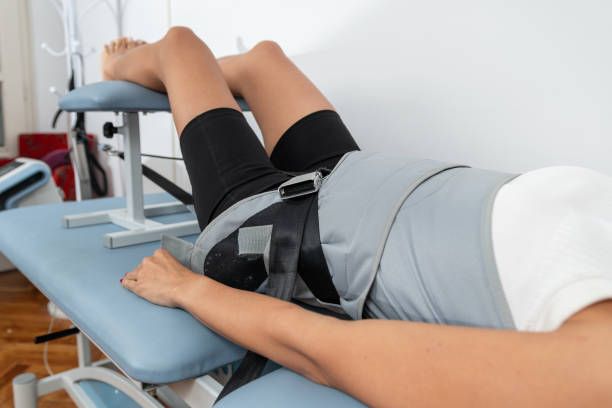
The positioning also differs depending on which part of the spine is being treated. Lumbar decompression typically has you lying face-down or face-up with a harness around your hips, while cervical decompression is done seated or reclined with a cradle supporting your neck. So it's not a one-size setup. The angle and the force are both adjusted based on where your problem disc actually sits.
Chiropractic adjustments are different too. An adjustment is a quick, targeted thrust meant to restore joint movement. Decompression is slower, sustained, and focused specifically on the disc space itself rather than the facet joints. Both can be useful, but they're doing different things.
The Mechanics: What Negative Pressure Actually Does
Here's the part most people find interesting once they hear it. When the machine creates that controlled pull, it drops the pressure inside the disc. Not just to zero, but actually negative. That negative intradiscal pressure acts like a vacuum, and it does two things. First, it pulls bulging or herniated disc material back toward the center, away from the nerve it's been pressing on. Second, it draws in fluid, oxygen, and nutrients that the disc needs to heal.
Spinal discs don't have a great blood supply. They rely on a process called imbibition, basically soaking up nutrients from surrounding tissue, to stay healthy. When a disc is compressed all day from sitting, standing, and moving, that process gets choked off. Decompression therapy essentially gives the disc a chance to drink again. You can read more about how intervertebral discs receive nutrition through this overview of intervertebral disc anatomy on Wikipedia.
The alternating cycles of pull and release also help retrain the soft tissue around the spine. Muscles and ligaments that have been guarding a painful area tend to stay tight even after the original injury starts to heal. The rhythmic nature of decompression gradually coaxes those tissues to let go.
Conditions That Respond Well to This Treatment
Herniated discs are the most common reason people end up in decompression therapy, but they're not the only one. Bulging discs, degenerative disc disease, sciatica, and facet syndrome all show up regularly on the list of conditions that respond to this kind of treatment. Sciatica in particular tends to improve when the pressure on the sciatic nerve root is reduced, which is exactly what decompression aims to do.
Degenerative disc disease is a bit different. The discs have thinned over time, and you can't fully reverse that. But decompression can reduce the inflammation and nerve irritation that makes the pain so persistent. For facet syndrome, the benefit comes partly from opening up the joint space and giving irritated facet joints some relief from compression. Worth knowing that results vary, and not everyone gets the same outcome.
Some clinics that offer Back on Trac Therapy in Rockville Centre NY report good outcomes with patients who've had chronic pain for years without finding relief through other conservative methods. That doesn't mean it works for everyone, but for the right candidate, it can make a real difference.
What a Session Actually Looks Like
Sessions usually run between 20 and 45 minutes. You get on the table, the harness goes on, and the machine is programmed for your specific settings. Then it starts. Most people describe the sensation as a gentle pulling, almost like a slow stretch. Some feel immediate relief. Others don't feel much during the session but notice less pain in the hours after.
You're not supposed to feel pain during the session. If you do, that's a signal something needs adjusting. The pull cycles on and off throughout the session, so it's not just constant tension the whole time. Between cycles, the tension drops and your spine gets a brief rest before the next pull begins.
A full course of treatment is usually somewhere between 12 and 20 sessions spread over several weeks. Robert Gerov Media has covered various non-surgical spine treatment approaches, and the consistent finding across patient stories is that people who complete the full protocol tend to do better than those who stop early when initial improvement levels off. That plateau is normal. Push through it.
Who Should and Shouldn't Try This
Good candidates are generally adults with disc-related pain, sciatica, or degenerative conditions who haven't responded well to medication or standard physical therapy and want to avoid surgery. Age isn't usually a barrier on its own. The question is more about the specific diagnosis and overall bone health.
Some people shouldn't do this. Spinal fractures are a hard stop. So is severe osteoporosis, because the pulling forces could cause damage rather than help. Prior spinal fusion surgery in the area being treated is another contraindication, since the hardware and fused segments can't respond to decompression the way a normal disc would. Pregnancy, certain tumors, and advanced spinal instability also put people outside the candidate pool.
Back on Trac Decompression Therapy in Rockville Centre NY, like any reputable program, should involve a proper intake evaluation before starting. If a clinic just straps you in without reviewing your imaging and medical history, that's a red flag. A good provider asks questions first.
Frequently Asked Questions
Does spinal decompression therapy hurt?
Most patients say no. The sensation is usually described as a mild, comfortable stretch. If you feel sharp pain during a session, tell the provider right away so they can adjust the settings or stop the session if needed.
How many sessions does it take to notice a difference?
Some people feel relief after the first few sessions. Others don't notice much until around session eight or ten. It depends on how long the problem has been there and how your body responds. Completing the full recommended course gives you the best shot at lasting results.
Is spinal decompression therapy the same as inversion therapy?
Not really. Inversion tables use gravity and body weight to create traction, with no real control over the amount of force applied. Decompression therapy uses a computer-controlled system that can target a specific disc level with precise, measured force. They're in the same general neighborhood, but the precision is very different.
Can I go back to normal activities after a session?
Usually yes, though most providers suggest avoiding heavy lifting or intense exercise right after. Light walking is generally fine. Your provider will give you specific guidance based on your condition and how the session went.
Will I need to keep coming back forever?
Not typically. The goal is to get the disc to heal and reduce nerve irritation enough that your body can maintain the improvement on its own. Many patients do occasional maintenance visits after completing their initial course, but it's not usually an ongoing weekly commitment for life. Back on Trac Therapy in Rockville Centre NY and similar programs are designed to get you better, not to keep you dependent on treatment.
If you've been living with disc pain for a while and haven't found anything that actually works, it's at least worth a conversation with a provider who can tell you honestly whether you're a good fit for this kind of care.