
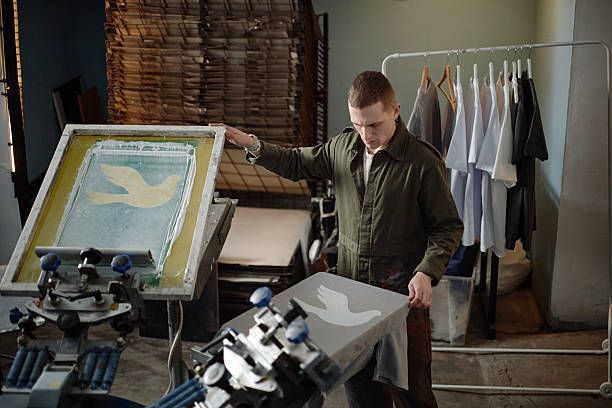
So you're looking at a $150 heat press on Amazon and thinking, "How hard can this be?" Pretty common place to start. The problem is, a lot of small business owners, event organizers, and hobby crafters buy that kit, spend a weekend on it, and end up with shirts that crack after three washes and a garage full of equipment they don't use. If you're deciding between buying a DIY setup and ordering from a professional shop, this is the honest breakdown nobody usually gives you. And if your project is based in Southern California, knowing your options for Custom Screen Printing in Glendora CA might save you a lot of money and frustration.
What People Actually Try at Home
There are three main routes people go down. Heat transfer vinyl, sometimes called HTV, is the most popular one. You cut shapes on a Cricut or similar machine, weed out the excess vinyl, and press it onto fabric with heat. Iron-on transfer paper is another method, where you print a design on special paper and transfer it with an iron or cheap press. And then there's the budget heat press route, where people buy a clamshell press in the $100 to $250 range and use pre-made transfers purchased online.
Each of these can look decent on day one. But they're not the same thing as professional screen printing or embroidery. Not even close. The difference shows up fast, usually after a handful of washes.
The Real Costs Nobody Puts in the Ad
Here's what the YouTube tutorials leave out. A basic Cricut machine runs $200 to $350. Good HTV vinyl is $8 to $15 per roll, and you'll go through more than you think on your first few projects. A half-decent heat press that actually produces consistent temperature and pressure costs $300 to $500, not $99. Add in weeding tools, heat tape, Teflon sheets, blank garments in the right fabric weight, and a few ruined shirts while you learn the right settings, and you're looking at $600 to $1,000 before you've made a single shirt that looks the way you wanted.
That's not a reason to never DIY. It's just the real number. Most people budget $200 and get surprised. Knowing the full cost upfront changes the math completely on whether the project is worth doing yourself.
How Durability Stacks Up After Washing
This is where DIY methods usually fall apart. Literally. HTV and iron-on transfers are heat-activated adhesives sitting on top of the fabric. They don't bond the same way ink does during a proper screen print. Over time, edges lift. Cracks appear. Colors fade faster than the shirt itself does.
Professional screen printing pushes ink through a mesh screen directly into the fabric fibers. Done right, with the correct ink and cure temperature, a screen-printed shirt can hold up for years of regular washing. Screen printing as a process has been refined over decades specifically for durability on textiles. That's not something a $9 roll of vinyl can replicate, no matter how carefully you press it.
If you're making one or two shirts for fun, maybe that's fine. But if you're putting a logo on shirts for a business, a team, or a fundraiser, you probably don't want them falling apart after a month.
The Time Problem Gets Ugly Fast at Scale
Making one shirt at home takes longer than you think. Designing, prepping the transfer, setting the press temperature, pressing, peeling, inspecting, redoing the ones that didn't stick right. Easy 20 to 30 minutes per shirt if you're new to it. Even experienced DIYers often land around 10 to 15 minutes per piece.
Now multiply that by 50. Or 100. That's a team jersey order, a company event, a school fundraiser. You're now talking about 15 to 25 hours of your personal time, probably spread over a couple of weekends, on top of whatever else you have going on. That time has value. A lot of people forget to count it. If your hourly rate at your day job is $40 or $50, spending 20 hours pressing shirts to save $200 on an order isn't actually saving you anything.
For bulk orders, Screen Printing in Glendora CA done by a professional shop almost always comes out cheaper per shirt once you factor in your time, material waste, and equipment wear. And you get consistent results across every single piece.
When DIY Actually Makes Sense
It's not always the wrong call. Honestly. If you're making two or three personalized gifts, experimenting with a small creative project, or selling one-off custom items where the slightly handmade look is part of the appeal, a home setup can work fine. Crafters who already own a Cricut and press for other projects aren't really adding much cost to do a shirt here and there.
Small runs with lots of size variations can also favor DIY, since professional shops often have minimum order quantities or charge extra for lots of different sizes in tiny quantities. If you need one medium, one large, and one extra-large of a design that changes slightly for each person, a home setup gives you flexibility a shop doesn't always offer.
One local shop that handles this kind of work is HGFX Inc., and they're upfront about what makes sense to bring to a shop versus handle yourself. That kind of honest guidance is worth looking for before you commit to either route.
How to Decide Which Route Is Right for Your Project
A few quick questions help sort this out fast. How many pieces do you need? Anything over 12 shirts usually tips toward a professional shop on cost and time. How long do they need to last? If these shirts are walking around as brand representation, durability matters. Do you already own the equipment? If yes, the math changes. If no, calculate startup costs before assuming you're saving money.
Also think about the design. Detailed, multi-color graphics don't translate well through HTV or cheap transfers. Simple text and bold single-color logos are where home methods hold up better. For Screen Printing in Glendora CA on complex artwork with more than two or three colors, a professional setup is almost always going to produce better results at a lower real cost.
And if you're comparing Custom Screen Printing in Glendora CA quotes from shops to your DIY estimate, make sure you're comparing apples to apples. Include your time, your waste, your equipment cost spread across the number of shirts you'll make, and the realistic quality of what you'll get.
Frequently Asked Questions
Is a heat press better than an iron for transfers?
Yes, noticeably. A good heat press applies even temperature and pressure across the whole design at once. An iron doesn't. You get hot spots, inconsistent pressure, and more transfer failures with an iron, especially on anything bigger than a few inches.
What's the minimum order where professional screen printing makes financial sense?
Most people find the break-even point somewhere around 12 to 24 pieces, depending on the shop and the design. Below that, your per-shirt cost at a shop can feel high. Above it, the shop almost always wins on total cost once you count your time and materials honestly.
Can heat transfer vinyl hold up as long as screen printing?
Not usually. Quality HTV can last a couple of years with careful washing, but most people notice peeling or cracking well before that. Screen-printed ink bonded properly into the fabric can outlast the garment itself. It's a real difference, not a small one.
What if I only need a few shirts in different sizes?
That's one of the better use cases for DIY. Shops sometimes struggle with tiny orders across many sizes, and the per-shirt cost goes up. A home setup lets you do one at a time without minimums. Just go in knowing the quality tradeoffs.
How do I find a good local shop instead of ordering online?
Ask to see samples of their work, specifically older prints that have been washed plenty of times. A good shop won't hesitate to show you. Check how they handle rush orders, whether they offer design help, and what their minimum quantities are. Local shops often have faster turnaround and easier communication than big online printers.
The bottom line is pretty simple. DIY can work, but it costs more and takes longer than most people plan for. For anything where quality and quantity both matter, a professional shop is usually the smarter move, and often the cheaper one once you do the full math.